The global healthcare landscape is undergoing a profound transformation. Artificial intelligence has moved from the laboratory into the clinical mainstream, and nowhere is this shift more evident than in diagnostic testing. According to industry leaders surveyed by Deloitte, nearly 50% of life sciences executives now rank digital transformation and AI as their top strategic priority—a dramatic shift from just three years ago.
The numbers tell a compelling story. The diagnostic testing market, valued at $215.86 billion in 2026, is projected to reach $274.53 billion by 2034, growing at a compound annual rate of 3.04%. This expansion is driven by a single, powerful force: the need for faster, more accurate early disease detection. When AI-powered systems can flag anomalies faster than manual review and enable real-time patient monitoring, the entire healthcare delivery model changes.
Consider what's happening in practice. Cleveland Clinic deployed an AI tool that scans unstructured medical notes to identify eligible trial participants in real time. Eli Lilly partnered with NVIDIA to build a supercomputer dedicated to molecular simulations. These aren't isolated experiments—they represent a systemic shift in how diagnostics inform clinical decisions.
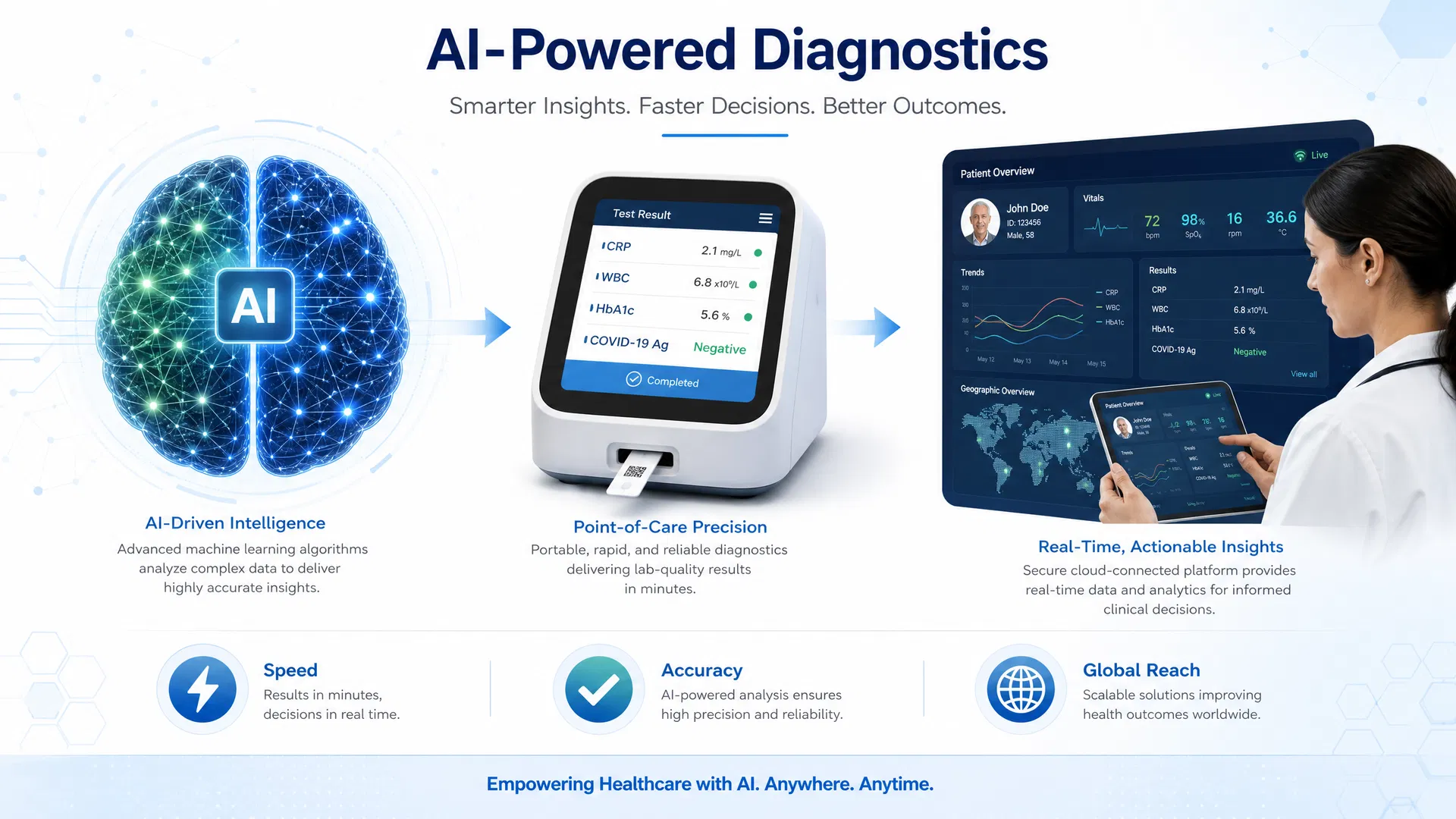
The convergence of AI and in-vitro testing creates a powerful synergy. Traditional diagnostic workflows rely on batch processing: samples are collected, transported to centralized labs, tested in batches, and results returned days later. By then, critical windows for intervention may have closed. AI-enhanced point-of-care diagnostics compress this timeline dramatically. Portable devices can now deliver lab-equivalent results in minutes, with AI algorithms analyzing patterns that humans might miss.
This is particularly transformative for conditions requiring early intervention. Insulin resistance, for example, is a silent precursor to type 2 diabetes, cardiovascular disease, and metabolic syndrome. Early detection enables lifestyle interventions and preventive therapies that can halt disease progression. Yet traditional screening often misses early-stage insulin resistance because diagnosis relies on indirect markers. More specific biomarkers—like intact proinsulin levels—provide earlier warning signals, but only if testing is accessible and rapid.
Platforms like those developed by Invitron.org exemplify this new diagnostic paradigm. Their point-of-care devices deliver lab-equivalent results in minutes using portable hardware, while their high-sensitivity ELISA kits enable precise biomarker measurement. When integrated with AI-driven data analytics, these tools become nodes in a distributed, real-time diagnostic network. Healthcare systems can shift from reactive, centralized testing to proactive, decentralized monitoring.
The implications extend beyond individual patient care. Decentralized diagnostics reduce the burden on centralized laboratory infrastructure, improve access in underserved regions, and enable continuous monitoring rather than episodic testing. Venture capital is flowing heavily into this space—digital health platforms combining telemedicine with AI-assisted diagnostics have attracted billions in funding.
The global trend is clear: diagnostics are becoming smarter, faster, and more distributed. The question for healthcare systems is not whether to adopt AI-powered diagnostics, but how quickly they can integrate these tools into existing workflows. Early adopters will gain a competitive advantage in patient outcomes, operational efficiency, and market positioning.