For decades, the gold standard for measuring vaccine success has been deceptively simple: count the antibodies. If a vaccinated individual produces sufficient neutralising antibodies against a pathogen, the vaccine is deemed effective. This paradigm has guided the development of vaccines against polio, measles, influenza, and COVID-19. Yet a landmark study published in March 2026 by virologists and vaccine researchers at KU Leuven's Rega Institute is now challenging this foundational assumption — and the implications for global vaccine development could be profound.
The research, led by PhD researcher Lara Kelchtermans and co-authored by Yeranddy A. Alpizar and Professor Kai Dallmeier, focused on the Sudan virus — a close relative of the more widely known Ebola virus — and an experimental candidate vaccine developed at the Rega Institute. What the researchers discovered upended conventional immunological wisdom: in their mouse model, antibodies did not appear to play an essential role in protection at all. Instead, a specific population of white blood cells known as CD4-T cells emerged as the critical protagonists of vaccine-mediated immunity.
The Sudan Virus: A Neglected Threat on Africa's Doorstep
The Sudan virus (SUDV) belongs to the Filoviridae family, the same viral family as Ebola virus disease (EVD). It causes severe viral haemorrhagic fever characterised by fever, organ failure, and uncontrolled bleeding, with case fatality rates historically ranging between 41% and 65%. Outbreaks occur predominantly in West and Central Africa, with the most recent documented outbreak occurring in Uganda in spring 2025. Despite its lethality and epidemic potential, Sudan virus has historically received far less research attention and funding than its Ebola counterpart, leaving affected communities in sub-Saharan Africa without an approved vaccine or effective antiviral therapy.
This neglect is not merely a scientific oversight — it is a public health equity crisis. Communities in Uganda, South Sudan, and the Democratic Republic of Congo face recurring exposure to a pathogen for which no licensed countermeasure exists. The KU Leuven study represents a critical step toward addressing this gap, not only by advancing a candidate vaccine but by fundamentally rethinking what "vaccine efficacy" means in the context of filoviral infections.
The Experiment: Dismantling the Antibody Assumption
The KU Leuven team developed an experimental candidate vaccine and tested it in a mouse model designed to mimic Sudan virus infection. The vaccine successfully induced antibody production — the expected and desired outcome. However, when the researchers disrupted the function of these antibodies, the vaccine remained fully effective. More strikingly, when purified antibodies were transferred via serum into unvaccinated mice, this passive transfer did not confer protection. The antibodies, in isolation, were not the mechanism of protection.
As Lara Kelchtermans explained: "The vaccine remained effective even when we disrupted the effect of the antibodies. Similarly, the administration of antibodies via serum transfer did not confer protection. The protection relied on other mechanisms." This finding is extraordinary because serum transfer studies — in which antibodies from immune individuals are transferred to naive recipients — have historically been used as a key proof-of-concept for antibody-mediated protection in Ebola-related vaccines.
CD4-T Cells: The Orchestrators of Immunity
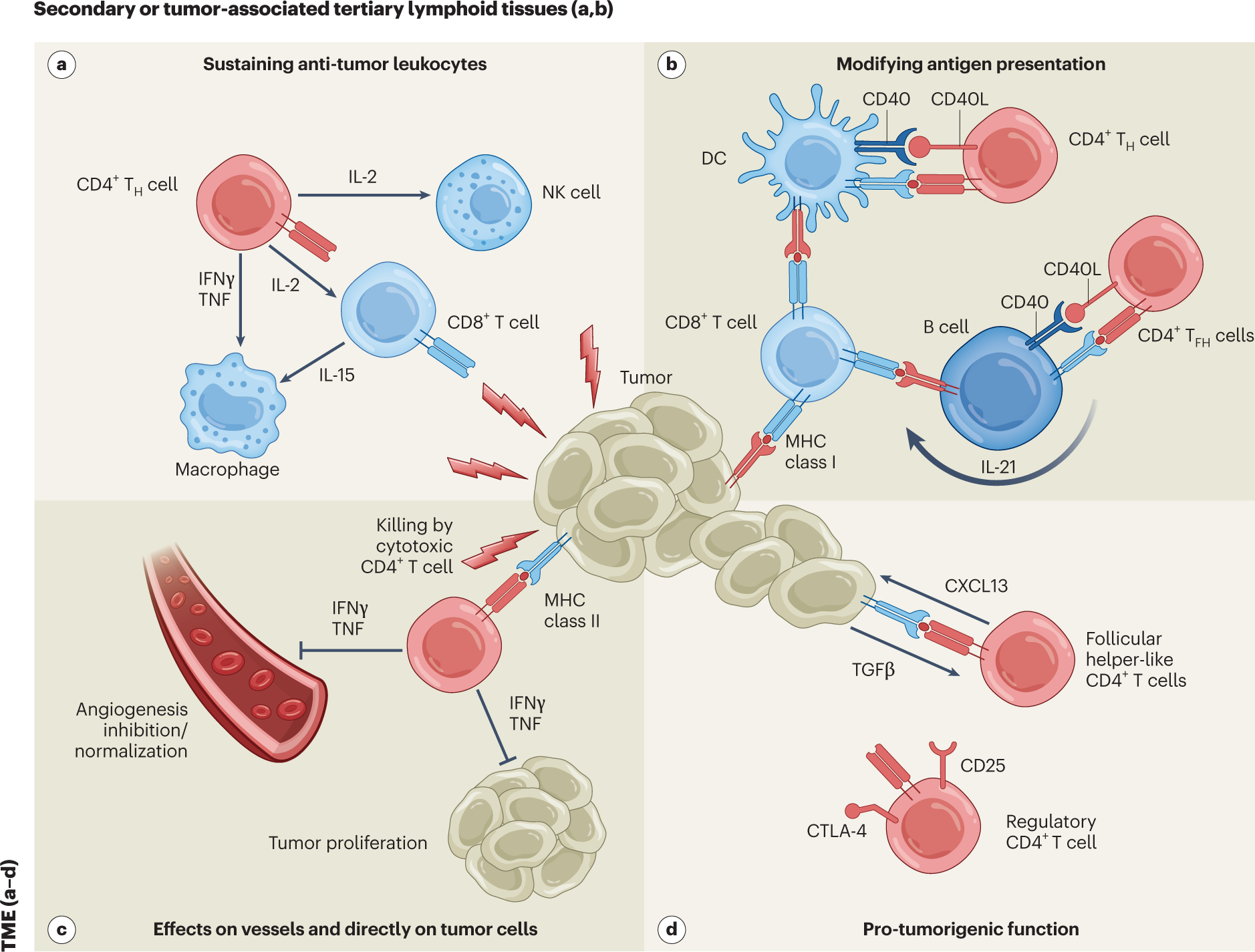
To identify the true mechanism of protection, the researchers systematically eliminated different populations of white blood cells after vaccination and assessed whether protection was lost. They tested NK (natural killer) cells and CD8-T cells, both well-established antiviral effectors. Removing these populations did not compromise vaccine efficacy. Only when CD4-T cells — also known as T helper cells — were depleted did the vaccine lose its protective effect entirely.
CD4-T cells are classically understood as "helper" cells: they coordinate immune responses by activating B cells to produce antibodies and by stimulating CD8-T cells to kill infected cells. They are not typically considered direct antiviral effectors in the context of acute viral infections. The KU Leuven findings suggest that this characterisation is incomplete.
Yeranddy A. Alpizar described the dual role of CD4-T cells observed in the study: "On the one hand, they act as an indispensable link and orchestrator of the immune response to acute infection; on the other, they provide protection against an overshooting reaction of the immune system." This second function — immunomodulation and protection against immunopathology — is particularly significant. In filoviral infections, a dysregulated immune response that causes excessive inflammation is itself a major driver of disease severity and death. A vaccine that not only blocks infection but also tempers the immune system's own destructive potential represents a qualitatively superior form of protection.
Professor Kai Dallmeier reinforced this point: "Sometimes, it is not sufficient for a vaccine to block the initial infection. It is also important to temper the mechanism by which a particular pathogen drives disease."
Implications for Vaccine Development and Evaluation
If the findings from this mouse model translate to human viral infections — a critical and as yet unconfirmed step — the consequences for vaccine science would be far-reaching. Current regulatory frameworks for vaccine approval rely heavily on antibody titres as surrogate markers of protection. Vaccines that fail to induce robust antibody responses may be prematurely abandoned, even if they generate strong cellular immunity through CD4-T cells or other mechanisms. Conversely, vaccines that produce high antibody titres but weak cellular responses may be approved despite offering incomplete or fragile protection.
Professor Dallmeier acknowledged the significance of this possibility: "The protective role of CD4-T cells is known in cancer and chronic infections, but these cells have received little attention as direct antiviral protagonists in vaccine responses. Our new study suggests that they might play a far more important role than previously thought."
For Africa-specific pathogens such as Sudan virus, Marburg virus, and Lassa fever — diseases for which antibody-based vaccine development has been slow and largely unsuccessful — the CD4-T cell paradigm opens an entirely new design space. Vaccine candidates could be engineered specifically to elicit strong CD4-T cell responses, using adjuvants, delivery platforms, or antigen designs that preferentially activate T helper pathways.
A Call for Broader Immunological Literacy in Vaccine Policy
This research also carries a message for policymakers, funding bodies, and public health institutions. The evaluation of vaccine candidates — particularly for neglected tropical diseases and emerging pathogens — must move beyond antibody-centric metrics. Cellular immunity assays, including CD4-T cell quantification and functional characterisation, should be incorporated into standard vaccine evaluation pipelines. This is especially urgent for pathogens like Sudan virus, where the window between outbreak detection and epidemic spread is narrow, and where the absence of a licensed vaccine has repeatedly cost lives.
As a biosafety and biosecurity professional working at the intersection of molecular microbiology, AI-driven data analysis, and global health policy, I view the KU Leuven findings as a pivotal moment. They remind us that the immune system is vastly more complex than any single metric can capture, and that our frameworks for measuring "protection" must evolve alongside our scientific understanding. The antibody era of vaccine evaluation is not over — but it is no longer sufficient on its own.
The Sudan virus does not wait for scientific consensus. Neither should our approach to vaccine science.