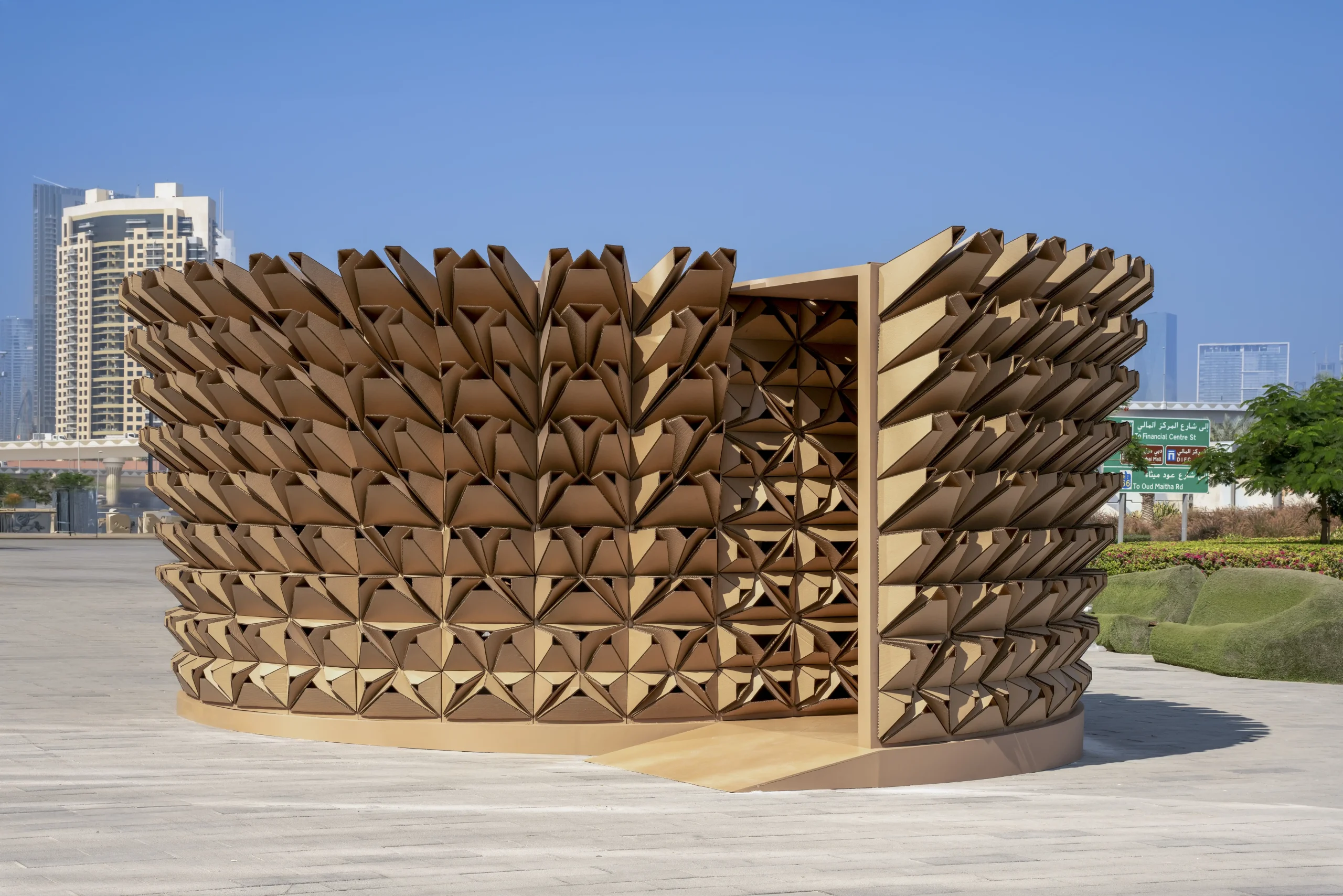
Evolution has been solving engineering problems for nearly four billion years. Every organism alive today is the product of an unbroken chain of successful adaptations — to temperature extremes, mechanical stress, chemical environments, predation, and resource scarcity. Biomimicry is the discipline that asks a deceptively simple question: what can we learn from the solutions evolution has already found? The answers, it turns out, are transforming architecture, materials science, robotics, medicine, and the design of entire cities.
The Principle of Biomimicry
The term was popularised by biologist and author Janine Benyus in her 1997 book Biomimicry: Innovation Inspired by Nature, which argued that nature functions as a "model, measure, and mentor" for human design. As a model, it provides blueprints — the hexagonal geometry of a honeycomb, the drag-reducing riblets of shark skin, the self-cleaning surface of the lotus leaf. As a measure, it offers a standard of performance refined by selection pressure over geological time. As a mentor, it embodies a philosophy: that sustainable, elegant, and effective design is not only possible but already exists, waiting to be understood and applied.
Biomimicry differs from simple nature-inspired aesthetics. It is a rigorous, functional discipline that begins with a design challenge and asks: how has life already solved this? The process involves deep biological research, cross-disciplinary collaboration, and a willingness to translate biological principles into engineering specifications — a translation that is rarely straightforward but consistently rewarding.
Landmark Applications
The history of biomimicry is populated with examples that have moved from laboratory curiosity to global infrastructure. The Shinkansen bullet train's iconic nose was redesigned by engineer Eiji Nakatsu, an avid birdwatcher, after he observed that kingfishers dive into water with minimal splash despite the dramatic density difference between air and water. The redesigned nose reduced the sonic boom produced when the train exited tunnels, cut energy consumption by 15%, and increased speed — all by mimicking the geometry of a bird's beak.
Velcro, one of the most commercially successful inventions of the 20th century, was inspired by the hook-and-loop mechanism of burdock burrs observed by Swiss engineer George de Mestral in 1941. The lotus effect — the extraordinary water-repellency of the lotus leaf, produced by microscopic wax crystals that cause water droplets to bead and roll — has been reproduced in self-cleaning paints, textiles, and architectural glass. Gecko-inspired adhesives, which exploit van der Waals forces through nanoscale hair-like structures, are enabling new generations of medical bandages and robotic grippers.
Biomimicry in Materials Science
At the nanoscale, biomimicry is opening frontiers that conventional materials science has barely begun to explore. The nacre (mother-of-pearl) of mollusc shells achieves a fracture toughness 3,000 times greater than the calcium carbonate of which it is composed, through a hierarchical brick-and-mortar microstructure that deflects and absorbs crack propagation. Researchers are reproducing this architecture in synthetic ceramics and composites for aerospace and biomedical applications.
Spider silk remains one of the most studied biomimetic targets: a material that is simultaneously stronger than steel, tougher than Kevlar, and biodegradable. The challenge of reproducing it lies not merely in the protein sequence but in the spinning process — the way a spider controls pH, ion concentration, and mechanical drawing to convert liquid silk dope into a solid fibre with precisely calibrated properties. Cracking this process would yield materials with applications ranging from surgical sutures to bulletproof textiles.
Biomimicry and Biosecurity
From a biosecurity and biosafety perspective, biomimicry offers both tools and lessons. The immune system is perhaps the most sophisticated security architecture ever evolved — a distributed, adaptive, memory-enabled defence system capable of recognising and neutralising an essentially unlimited diversity of threats. Computational immunologists are drawing on its principles to design intrusion detection systems, antiviral strategies, and even cybersecurity protocols. The concept of "immune-inspired" algorithms — systems that learn to distinguish self from non-self, and that mount proportionate, targeted responses to novel threats — has direct applications in biosurveillance and pathogen detection.
Similarly, the way ecosystems manage resilience — through redundancy, modularity, diversity, and feedback — offers a model for designing biosecurity systems that are robust to both known and unknown threats. A monoculture is vulnerable; a diverse ecosystem is resilient. The same principle applies to biosafety infrastructure, regulatory frameworks, and the design of laboratory containment systems.
Toward a Biomimetic Civilisation
The deeper ambition of biomimicry is not merely to borrow individual solutions from nature, but to redesign human civilisation along ecological principles — to create industrial systems that, like ecosystems, produce no waste, run on current solar income, and maintain themselves through cycles of renewal rather than extraction. This vision, articulated by thinkers from Benyus to William McDonough and Michael Braungart (authors of Cradle to Cradle), represents a fundamental challenge to the linear, extractive model of industrial production.
The path from inspiration to implementation is long and technically demanding. But the evidence is accumulating that biomimicry is not merely an aesthetic aspiration — it is a rigorous, productive, and increasingly necessary approach to the design challenges of the 21st century. In a world facing the consequences of centuries of engineering that ignored biological principles, learning to think like an ecosystem may be the most important intellectual shift of our time.