When biosecurity professionals catalogue the threats that most endanger human health at scale, they typically focus on pandemic pathogens, bioterrorism agents, and antimicrobial resistance. Counterfeit medicines rarely appear on the same list — yet by any epidemiological measure, they belong there. The World Health Organization estimates that 1 in 10 medications sold globally are either fake or substandard, a figure that translates into hundreds of thousands of preventable deaths annually. In low- and middle-income countries, where the burden is heaviest, counterfeit drugs are not a marginal problem but a systemic one, embedded in fragile supply chains and exploited by criminal networks that operate with near-total impunity.
A new invention from the University of California, Riverside — a sub-$30 pill dissolution device that generates a unique "disintegration fingerprint" for each medication — has brought renewed attention to this crisis. The full research is described in a March 2026 UCR news release at https://news.ucr.edu/articles/2026/03/19/new-test-dissolves-threat-fake-drugs. But the UCR device, remarkable as it is, also illuminates a deeper question: why has pharmaceutical authentication remained so chronically under-resourced as a global health security priority?
The Epidemiology of Fake Drugs
The scale of the counterfeit drug problem defies easy comprehension. The WHO's estimate that 1 in 10 medications are substandard or falsified encompasses an extraordinary range of products: cancer treatments that contain no active chemotherapy agent, antimalarials that are pure chalk, antibiotics that carry a fraction of the stated dose, and insulin preparations that have been diluted to ineffectiveness. In each case, the patient receives a product that not only fails to treat their condition but may actively worsen it — either through toxicity from substitute ingredients or through the selection pressure that sub-therapeutic antibiotic doses exert on bacterial populations, accelerating the development of antimicrobial resistance.
This last consequence deserves particular emphasis. The link between counterfeit antibiotics and antimicrobial resistance (AMR) is well-established in the scientific literature but insufficiently integrated into mainstream AMR policy frameworks. When a patient receives an antibiotic that contains 30% of the stated active ingredient, the bacteria causing their infection are exposed to a sub-lethal concentration of the drug — precisely the conditions that favour the selection of resistant strains. Counterfeit antibiotics are therefore not merely a drug safety problem; they are an AMR accelerant, contributing to one of the most serious long-term biosecurity threats facing humanity.
The Technology Gap in Drug Authentication
The fundamental challenge in combating counterfeit drugs has always been one of technology access. The gold-standard methods for pharmaceutical authentication — high-performance liquid chromatography (HPLC), mass spectrometry, near-infrared spectroscopy — are accurate, reliable, and entirely inaccessible to the settings where counterfeit drugs are most prevalent. A district hospital in rural Kenya or a community pharmacy in rural Myanmar does not have a mass spectrometer. It does not have a trained analytical chemist. It may not even have reliable electricity.
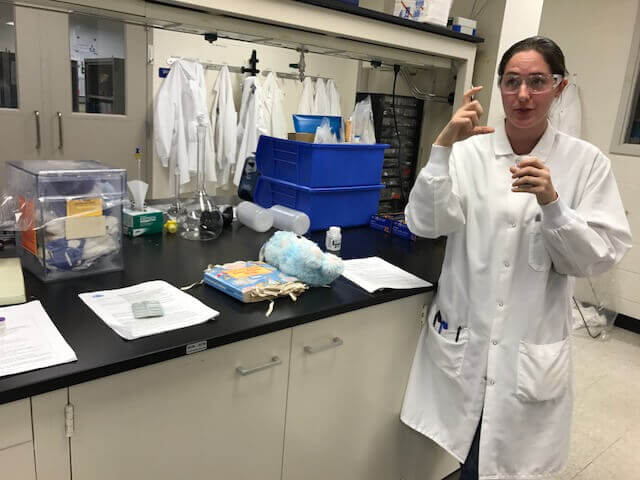
This technology gap has persisted for decades, and it has been exploited by counterfeit drug manufacturers who understand that their products are unlikely to be tested at the point of sale. The UCR disintegration fingerprinting device, developed by associate professor William Grover and his team, represents a direct attack on this gap. By repurposing a low-cost infrared sensor to track the dissolution profile of a pill in water, the device generates a digital signature that can identify a medication with 90% accuracy across a library of over 30 drugs. The open-source design means it can be manufactured locally for as little as $5.
Biosecurity Implications: Supply Chain Integrity as a Security Imperative
From a biosecurity perspective, the counterfeit drug problem is best understood as a supply chain integrity failure with security consequences. Pharmaceutical supply chains in low-income countries are characterised by multiple handoffs between manufacturers, distributors, wholesalers, and retailers — each representing an opportunity for substitution or adulteration. Criminal networks have become sophisticated in exploiting these vulnerabilities, producing counterfeit products with packaging that is visually identical to the authentic article and distributing them through channels that are indistinguishable from legitimate trade.
The biosecurity community has developed extensive frameworks for managing supply chain integrity in the context of biological agents and dual-use research. These frameworks — emphasising chain of custody, authentication at multiple points, and rapid detection of anomalies — are directly applicable to pharmaceutical supply chains but have rarely been applied in that context. The UCR device provides a practical tool for implementing authentication at the point of dispensing, the final and most critical link in the pharmaceutical supply chain.
A Call for Integrated Policy Action
The UCR invention is a technological breakthrough, but technology alone cannot solve a problem that is fundamentally one of governance, regulation, and political will. Effective responses to the counterfeit drug crisis require coordinated action across multiple domains: strengthened national medicines regulatory authorities, international information-sharing on counterfeit drug seizures, criminal prosecution of manufacturers and distributors, and the integration of drug authentication tools into routine pharmaceutical supply chain management.
The WHO's Member State Mechanism on Substandard and Falsified Medical Products provides a framework for international coordination, but its implementation has been uneven. High-income countries that are the primary sources of pharmaceutical innovation have strong incentives to protect the integrity of their products globally — both for commercial reasons and because counterfeit drugs undermine confidence in legitimate medicines, including vaccines.
For biosecurity professionals, the message is clear: counterfeit medicines are not a peripheral concern but a central one. They kill directly, they accelerate AMR, and they erode the trust in health systems that is essential for effective pandemic response. The disintegration fingerprinting technology described at https://news.ucr.edu/articles/2026/03/19/new-test-dissolves-threat-fake-drugs is a step forward. The next step is ensuring it reaches the hands of those who need it most.
_