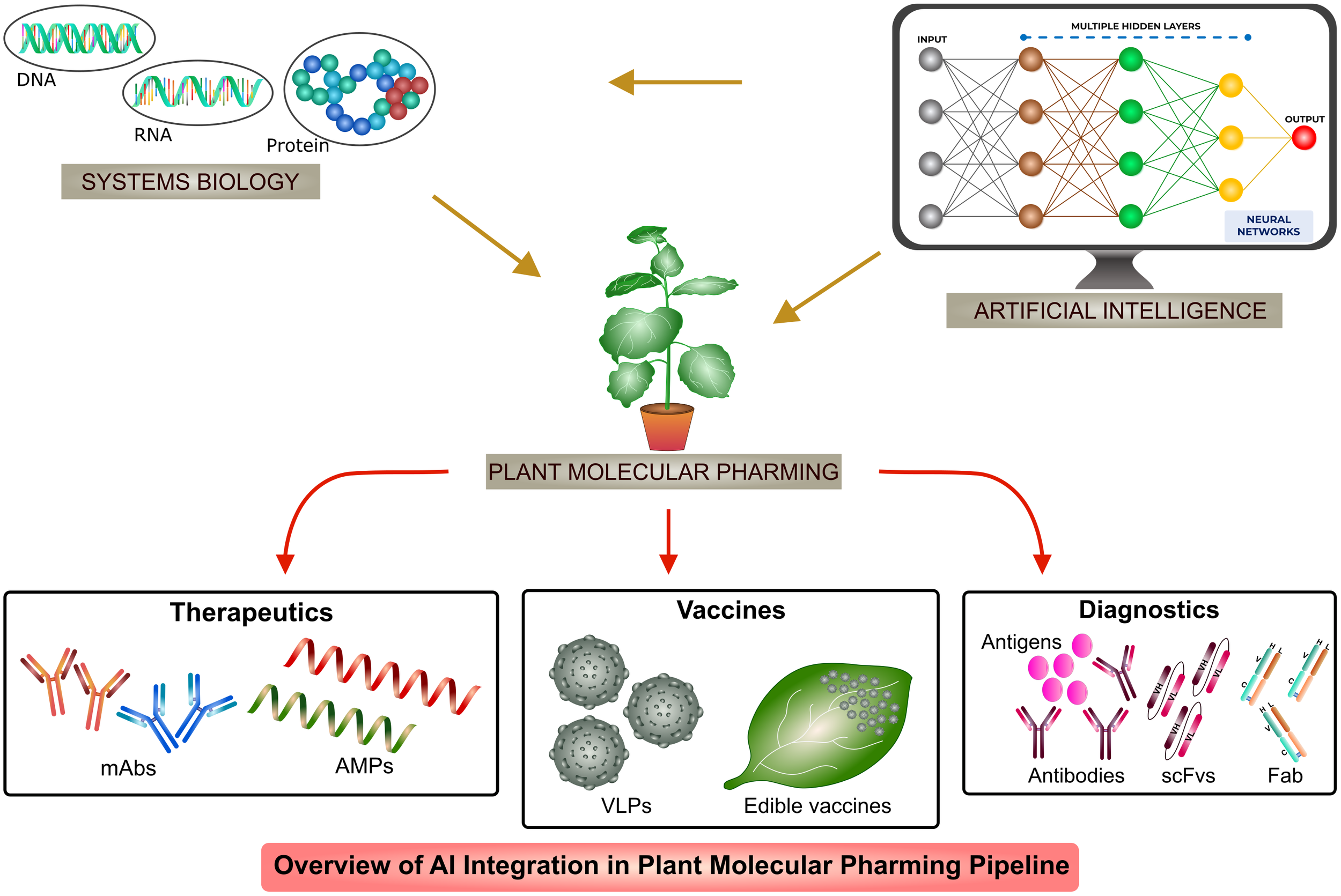
Genetically modified organisms have been the subject of sustained scientific scrutiny for over four decades. The consensus among major scientific bodies — including the World Health Organisation, the National Academies of Sciences, Engineering and Medicine, and the European Commission's Scientific Committee — is unambiguous: GMO foods currently available on the market are safe for human consumption, and the environmental risks of approved GMO crops are manageable under appropriate regulatory oversight. Yet public perception remains deeply divided. Surveys consistently show that a significant proportion of the population in both high-income and low-income countries harbours serious concerns about GMO safety, concerns that are frequently rooted not in evidence but in myth.
The persistence of GMO misinformation is not an accident. It is the product of a complex information ecosystem in which emotionally resonant, simply stated falsehoods spread faster and further than nuanced, evidence-based corrections. The challenge for science communicators, biosafety professionals, and regulatory scientists is not merely to produce accurate information — it is to ensure that accurate information reaches the people who need it, in a form they can engage with, at the moment when they are most likely to encounter the myths it contradicts. Machine learning, and in particular the technique of Low-Rank Adaptation (LoRA) fine-tuning of large language models, is emerging as a powerful tool for meeting this challenge.
The Landscape of GMO Misinformation
Before examining the technical solutions, it is worth understanding the nature and scale of the problem. GMO misinformation takes many forms, but several recurring myths account for the majority of public concern. The claim that GMO foods cause cancer, allergies, or organ damage — despite the absence of any credible epidemiological evidence — circulates widely on social media and in alternative health communities. The assertion that GMOs are designed to make crops sterile, forcing farmers into perpetual dependence on seed companies, conflates the biological properties of GMO crops with specific corporate licensing practices. The claim that GMOs "contaminate" conventional and organic crops through gene flow, rendering them permanently altered, misrepresents the well-understood and manageable phenomenon of cross-pollination.
| Common GMO Myth | Scientific Reality | Primary Spread Vector |
|---|---|---|
| GMO foods cause cancer and organ damage | No credible epidemiological evidence; long-term studies show no harm | Social media, alternative health websites |
| GMO crops produce sterile "terminator seeds" | Terminator technology was never commercialised; most GMO seeds are fertile | Anti-GMO advocacy groups, viral posts |
| GMO genes permanently contaminate wild plants | Gene flow is a natural, manageable phenomenon; no evidence of permanent ecological harm | Environmental activist networks |
| GMOs are untested and unregulated | GMO crops undergo more rigorous regulatory review than conventional crops | General misinformation, misreading of regulatory processes |
| Bt toxins in GMO crops are harmful to humans | Bt proteins are highly specific to target insects; safe for mammals at any dietary exposure | Organic food marketing, anti-pesticide campaigns |
| GMOs reduce biodiversity | Evidence shows mixed effects; some GMO crops have reduced pesticide use and supported biodiversity | Environmental advocacy, conflation with monoculture farming |
What makes these myths particularly resistant to correction is their emotional architecture. They tap into legitimate anxieties about corporate power, food safety, and environmental integrity — anxieties that are not unreasonable in themselves, but that are being channelled toward a scientifically inaccurate target. Standard fact-checking approaches — publishing corrections, issuing press releases, updating Wikipedia articles — have proven insufficient to counter myths that are continuously regenerated, personalised, and distributed through algorithmically optimised social media feeds.
Machine Learning as a Myth-Detection Infrastructure
The first contribution of machine learning to GMO myth debunking is infrastructural: the ability to detect, classify, and track misinformation at a scale that no human team could match. Natural language processing (NLP) models trained on labelled datasets of scientific claims and misinformation can be deployed as automated monitors across social media platforms, news aggregators, online forums, and comment sections — identifying GMO-related claims in real time and flagging those that contradict the scientific consensus for human review or automated response.
The architecture of such a system typically involves several layers. A claim extraction model — often a fine-tuned version of a transformer architecture such as BERT or RoBERTa — identifies sentences or passages that make specific factual assertions about GMOs. A claim classification model then categorises each extracted claim as consistent with, inconsistent with, or not addressed by the scientific literature. A retrieval-augmented generation (RAG) system can then match flagged claims to relevant peer-reviewed evidence, generating candidate corrections that are grounded in specific studies rather than generic reassurances.
The performance of these systems on GMO-specific tasks has improved dramatically with the availability of domain-specific training data. The GENIE dataset, developed by researchers at the University of Sheffield, provides a benchmark for scientific claim verification that includes agricultural biotechnology claims. Models fine-tuned on this dataset achieve accuracy rates of over 85% on GMO claim classification tasks — sufficient for reliable first-pass screening, though not for autonomous deployment without human oversight in high-stakes contexts.
Low-Rank Adaptation: Making Domain Fine-Tuning Accessible
The most significant recent development in the application of language models to science communication is the technique of Low-Rank Adaptation, or LoRA. To understand why LoRA matters for GMO myth debunking specifically, it is necessary to understand the challenge it addresses.
Large language models such as GPT-4, LLaMA, and Mistral are trained on vast corpora of general text and possess impressive general reasoning capabilities. However, their performance on highly specialised scientific tasks — such as accurately characterising the regulatory status of a specific GMO crop, or correctly explaining the mechanism of Bt toxin specificity — is limited by the generality of their training data. Full fine-tuning of these models on domain-specific scientific literature is technically feasible but computationally prohibitive: updating all the parameters of a model with billions of weights requires hardware resources that are beyond the reach of most research institutions and public health agencies.
LoRA addresses this problem elegantly. Rather than updating all model parameters during fine-tuning, LoRA introduces a small number of additional low-rank matrices into the model's attention layers. These matrices capture the domain-specific adaptations required for the target task, while the original model weights remain frozen. The result is a fine-tuned model that performs comparably to a fully fine-tuned version on domain-specific tasks, but requires only a fraction of the computational resources — typically 10,000 to 100,000 times fewer trainable parameters than full fine-tuning.
The practical implication for GMO science communication is significant. A research institution or regulatory agency with access to a curated corpus of peer-reviewed GMO literature — including safety assessments, ecological studies, and regulatory documents — can use LoRA to fine-tune a general-purpose language model into a domain expert capable of accurately characterising GMO science, identifying specific myths, and generating evidence-grounded corrections. This process can be accomplished on a single GPU in a matter of hours, rather than requiring weeks of distributed training on specialised hardware.
LoRA in Practice: A GMO Myth-Debunking Pipeline
A practical LoRA-based GMO myth-debunking pipeline would operate through several stages. The first stage is corpus preparation: assembling a high-quality training dataset that includes peer-reviewed publications on GMO safety and ecology, regulatory risk assessments from agencies such as the US Food and Drug Administration (FDA), the European Food Safety Authority (EFSA), and the Kenya Biosafety Authority (NBA), as well as curated examples of common GMO myths paired with evidence-based corrections. The quality and representativeness of this corpus is the most critical determinant of the fine-tuned model's performance.
The second stage is LoRA fine-tuning itself. Using frameworks such as Hugging Face's Parameter-Efficient Fine-Tuning (PEFT) library, a base model — typically a 7-billion or 13-billion parameter instruction-tuned LLM — is adapted to the GMO domain by training the low-rank adaptation matrices on the prepared corpus. Hyperparameter choices, including the rank of the adaptation matrices (typically 4–64) and the learning rate, are tuned through validation on a held-out subset of the corpus.
The third stage is evaluation. The fine-tuned model is assessed on a benchmark of GMO-specific claim classification and correction generation tasks, with outputs reviewed by domain experts — molecular biologists, biosafety scientists, and regulatory specialists — for factual accuracy, appropriate nuance, and communicative effectiveness. This human-in-the-loop evaluation is essential: LoRA fine-tuning dramatically improves domain accuracy, but does not eliminate the risk of hallucination or overconfident assertion, particularly on contested or rapidly evolving scientific questions.
The fourth stage is deployment. The validated model can be integrated into a range of communication channels: a web-based fact-checking tool that allows users to submit claims for evaluation; an API that social media platforms can use to flag potentially misleading GMO content; a chatbot deployed on agricultural extension service websites to answer farmer questions about GMO crops; or an automated response system that generates evidence-based replies to GMO misinformation in online forums.
Case Study: Debunking the "Terminator Seed" Myth
To illustrate how a LoRA-fine-tuned model performs on a specific GMO myth, consider the "terminator seed" claim — the assertion that GMO crops are engineered to produce sterile seeds, preventing farmers from saving and replanting seed from their harvest. This myth is one of the most persistent in GMO discourse, and one of the most consequential: it directly shapes farmer attitudes toward GMO adoption in sub-Saharan Africa and South Asia, where seed saving is a critical livelihood strategy.
A general-purpose LLM, when prompted with the claim "GMO crops produce sterile seeds that cannot be replanted," may generate a response that is broadly accurate but lacks the specificity needed to be convincing to a sceptical audience. It may fail to mention that the Technology Protection System (TPS) — the specific genetic mechanism underlying "terminator" technology — was developed in the 1990s but has never been commercialised, in part due to a voluntary moratorium by the primary patent holder, Monsanto (now Bayer). It may not cite the specific CBD decision (Decision V/5 of the Convention on Biological Diversity) that called for a de facto moratorium on field testing of TPS. It may not distinguish between the biological sterility of TPS and the contractual restrictions on seed saving that do apply to some commercially licensed GMO varieties.
A LoRA-fine-tuned model trained on a corpus that includes the relevant regulatory documents, patent literature, and peer-reviewed analyses of seed saving practices will generate a response that addresses all of these dimensions — providing the kind of specific, sourced, contextually nuanced correction that is most likely to be persuasive to a farmer, a journalist, or a policymaker who has encountered the myth.
Limitations and Ethical Considerations
The application of LoRA and machine learning to GMO myth debunking is promising, but it is not without limitations and ethical complexities. The quality of any fine-tuned model is bounded by the quality of its training corpus: a corpus that over-represents the perspectives of large agricultural biotechnology companies, or that excludes legitimate scientific debates about the ecological impacts of specific GMO traits, will produce a model that is not genuinely balanced. The curation of training data for science communication models requires the same rigour and transparency as the curation of evidence for regulatory risk assessments.
There is also the question of authority and trust. Automated fact-checking systems, however accurate, may be perceived as tools of institutional or corporate censorship by communities that are already sceptical of scientific authority. The deployment of AI-powered myth debunking must be accompanied by transparent communication about how the system works, who has curated its training data, and what its limitations are. Trust in the tool is inseparable from trust in the institution that deploys it.
Finally, there is the question of what counts as a "myth" versus a "legitimate scientific debate." GMO science is not monolithic: there are genuine scientific disagreements about the long-term ecological impacts of gene flow from GMO crops, the adequacy of current regulatory frameworks for novel GMO traits, and the social and economic consequences of GMO adoption in different agricultural contexts. A responsible myth-debunking system must be capable of distinguishing between claims that contradict scientific consensus and claims that reflect genuine scientific uncertainty — and must communicate that distinction clearly to users.
Toward a Smarter Science Communication Infrastructure
The convergence of LoRA fine-tuning, retrieval-augmented generation, and real-time claim detection is creating the technical foundation for a new generation of science communication infrastructure — one that is faster, more scalable, and more domain-accurate than anything previously available. For biosafety professionals, agricultural scientists, and science communicators working in the GMO space, this infrastructure offers a genuine opportunity to shift the balance of the information ecosystem in favour of evidence.
The goal is not to silence dissent or to pretend that all questions about GMOs are settled. It is to ensure that when people encounter GMO misinformation — as they inevitably will, in their social media feeds, in conversations with neighbours, in the advice of community leaders — they also have access to accurate, accessible, evidence-grounded information that allows them to make informed judgments. Machine learning, deployed thoughtfully and transparently, is a powerful tool in service of that goal. LoRA makes that tool accessible to the institutions and communities that need it most.
In a world where the stakes of agricultural and biosafety decision-making are rising — where climate change is driving demand for novel crop traits, where pandemic preparedness requires public understanding of biotechnology, and where the governance of gene drives and synthetic biology depends on an informed citizenry — the quality of science communication is not a peripheral concern. It is a determinant of outcomes. Investing in the AI infrastructure that supports it is, in the most direct sense, an investment in biosafety itself.