The Last Line of Defence: How Real-Time DNA Sequence Screening Is Redefining Biosecurity Compliance
The Last Line of Defence: How Real-Time DNA Sequence Screening Is Redefining Biosecurity Compliance
The cost of synthesising a custom DNA sequence has fallen by more than five orders of magnitude over the past two decades. What once required a national laboratory budget can today be ordered online for the price of a textbook. This democratisation of synthetic biology has unlocked extraordinary scientific progress — but it has also created a biosecurity challenge that no policy framework has fully solved: how do you prevent the synthesis of sequences that could be weaponised, while preserving the open scientific exchange that makes modern biology possible?
The answer, increasingly, lies in automated, real-time DNA sequence screening — and BioScreens, powered by the SafeDNA API, represents one of the most technically sophisticated implementations of this approach available today.
The Regulatory Imperative
The biosecurity case for DNA synthesis screening is not theoretical. The 2001 anthrax letter attacks, the 2011 H5N1 gain-of-function controversy, and the 2022 US Executive Order on AI Safety — which for the first time mandated screening protocols for federally funded DNA synthesis — have each demonstrated that the gap between legitimate research and potential misuse is narrower than policymakers once assumed.
The International Gene Synthesis Consortium (IGSC), a voluntary industry body representing the major commercial synthesis providers, established screening guidelines as early as 2009. However, voluntary compliance has always been uneven, and smaller providers operating outside IGSC membership have historically operated without any screening infrastructure. The US National Biosafety Advisory Board (NSABB) and the Johns Hopkins Center for Health Security have both called for mandatory, standardised screening as a baseline requirement for all synthesis providers worldwide.
BioScreens addresses this gap directly. Rather than requiring each institution or provider to build and maintain their own hazard database — a technically demanding and continuously evolving task — BioScreens provides a cloud-based screening service powered by the SafeDNA API, which maintains a curated database of select agents, toxins, and potential pandemic pathogens updated in line with current regulatory lists including the CDC/USDA Select Agent Program, the Australia Group Control Lists, and WHO Pandemic Pathogen guidance.
How the Screening Works
The technical architecture of BioScreens DNA Sequence Screening is designed around two competing requirements that are, at first glance, irreconcilable: the need to compare a submitted sequence against a comprehensive hazard database, and the need to ensure that the submitted sequence itself is never exposed to the platform operator or any third party.
The solution is cryptographic screening — a technique in which the query sequence is transformed using a one-way cryptographic function before transmission, allowing it to be compared against pre-hashed database entries without the raw sequence ever leaving the submitter's environment. This approach, analogous to the way password hashing works in authentication systems, means that a researcher submitting a novel gene sequence for screening cannot have that sequence intercepted, stored, or reverse-engineered by the platform.
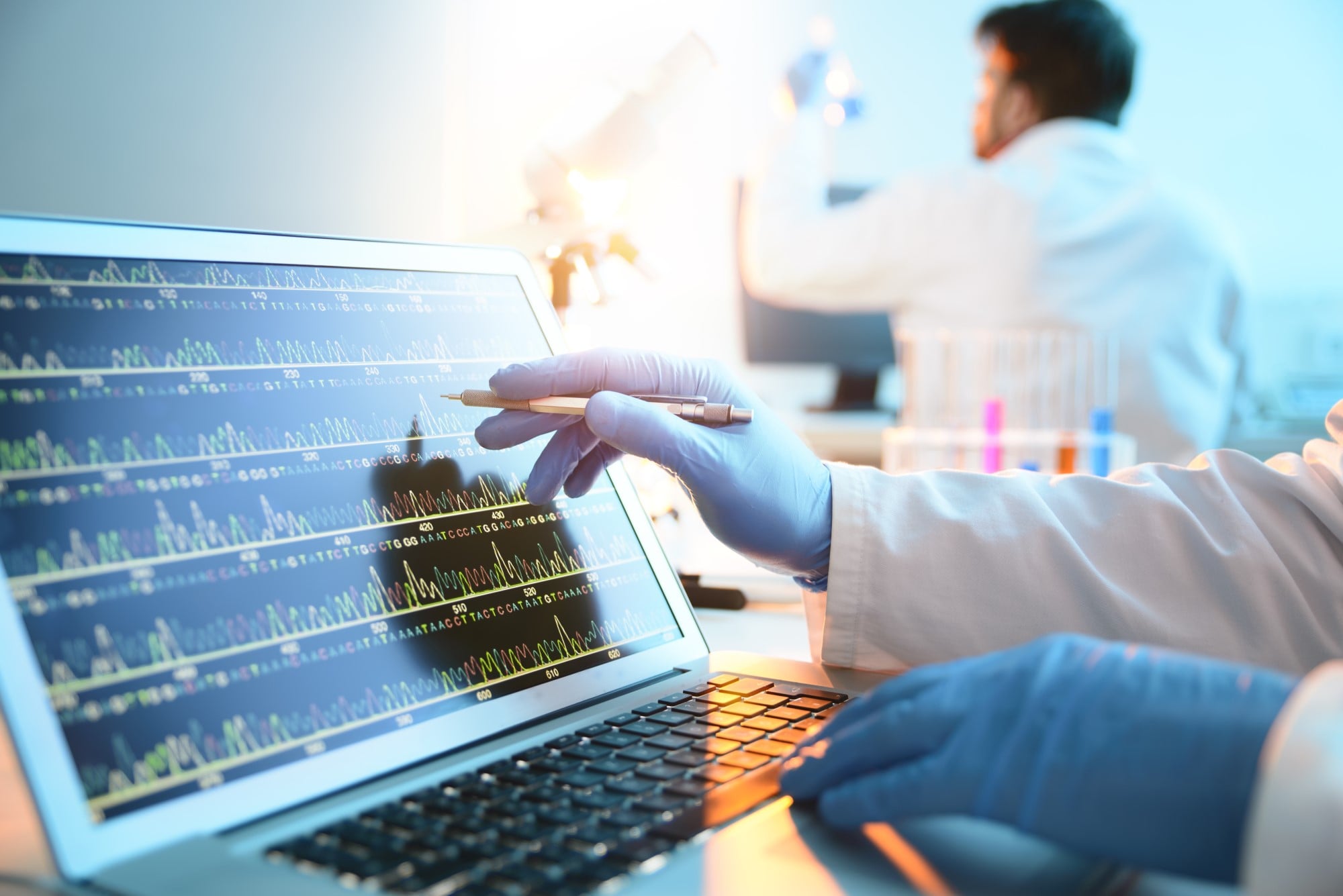
The workflow is straightforward. A researcher pastes a FASTA-formatted sequence or raw nucleotides into the BioScreens interface. The platform performs cryptographic screening against the SafeDNA hazard database and returns a synthesis permission decision — Granted or Denied — within an average of under two seconds. The result is accompanied by a full hazard breakdown: nucleotide-level hit region maps, organism identifications with accession numbers, and a PDF report suitable for compliance records or institutional review.
| Metric | Value |
|---|---|
| Sequences screened to date | 10 million+ |
| Average response time | < 2 seconds |
| Platform uptime SLA | 99.9% |
| Countries supported | 180+ |
The platform also maintains a complete audit trail of all screening requests, with filterable history and result archiving — a feature that is increasingly required by institutional biosafety committees and funding agencies as part of grant compliance documentation.
A Concrete Example
Consider a researcher designing a recombinant plasmid for protein expression. They submit the sequence of pUC19 — a standard laboratory cloning vector — and receive a Granted decision in 1.2 seconds, with zero hazard hits across 2,686 base pairs. The result is exactly what the researcher expected, but the compliance record is now documented and auditable.
Contrast this with a hypothetical submission of a sequence containing regions homologous to Influenza A (H1N1) haemagglutinin — a select agent under the CDC/USDA framework. BioScreens returns a Denied decision, identifying two hazard hits with nucleotide-level annotations showing precisely which regions of the submitted sequence triggered the alert. The researcher is informed before any synthesis order is placed, preventing a potential regulatory violation and, more importantly, a potential biosecurity incident.
Why This Matters for African Biosecurity Infrastructure
For researchers and institutions in Sub-Saharan Africa, the significance of a platform like BioScreens extends beyond individual compliance. Africa is home to some of the world's most significant emerging infectious disease hotspots — from Rift Valley fever in Kenya to Ebola in the DRC — and the continent's synthetic biology capacity is growing rapidly, with new gene synthesis facilities and biofoundries established in South Africa, Kenya, and Nigeria over the past five years.
Yet Africa's biosecurity regulatory infrastructure has historically lagged behind its scientific capacity. Few African countries have fully implemented the Cartagena Protocol's biosafety frameworks for synthetic biology, and institutional biosafety committees at African universities often lack the technical resources to evaluate DNA synthesis requests against current hazard databases. BioScreens, with its $10/month pricing model and support for 180+ countries, offers a practical, accessible entry point for African institutions seeking to implement credible biosecurity screening without the capital investment required to build proprietary infrastructure.
Conclusion
The democratisation of DNA synthesis is one of the defining features of 21st-century biology. Ensuring that this democratisation does not inadvertently democratise access to biological weapons requires infrastructure that is as fast, accessible, and technically rigorous as the synthesis technology itself. BioScreens represents a meaningful step toward that infrastructure — combining cryptographic privacy, real-time hazard detection, and comprehensive audit capabilities in a platform that is accessible to institutions of any size, anywhere in the world.
Reference: BioScreens Biosecurity Intelligence Platform — https://www.bioscreens.org/