The Scientific Frameworks Architect: A New Role at the Intersection of Biology, Data, and Artificial Intelligence
Science has always been organised around frameworks — conceptual structures that define the questions worth asking, the methods appropriate for answering them, and the standards by which answers are evaluated. The germ theory of disease, the central dogma of molecular biology, the theory of evolution by natural selection — these are not just empirical claims but frameworks that organise entire research programmes, determine what counts as evidence, and shape the institutions and practices through which science is conducted.
The transformation of the life sciences by AI, data science, and systems thinking is creating a new kind of framework challenge. The biological knowledge being generated by modern high-throughput technologies is too vast, too heterogeneous, and too rapidly evolving to be organised by the conceptual frameworks of classical biology. New frameworks are needed — frameworks that can integrate genomic, proteomic, metabolomic, and ecological data; that can represent the dynamic, context-dependent nature of biological systems; that can interface with AI systems that learn from data rather than from explicit rules; and that can support the governance and policy decisions that the biotechnology revolution demands.
The professionals who design, build, and maintain these frameworks are what we might call Scientific Frameworks Architects — a new kind of expert whose role sits at the intersection of biology, data science, AI, and science policy.
What Is a Scientific Frameworks Architect?
The Scientific Frameworks Architect is not a biologist who has learned to code, nor a data scientist who has learned some biology, nor a policy analyst who has read about AI. The role requires genuine expertise across all of these domains, combined with the systems thinking and design sensibility needed to integrate them into coherent, functional frameworks.
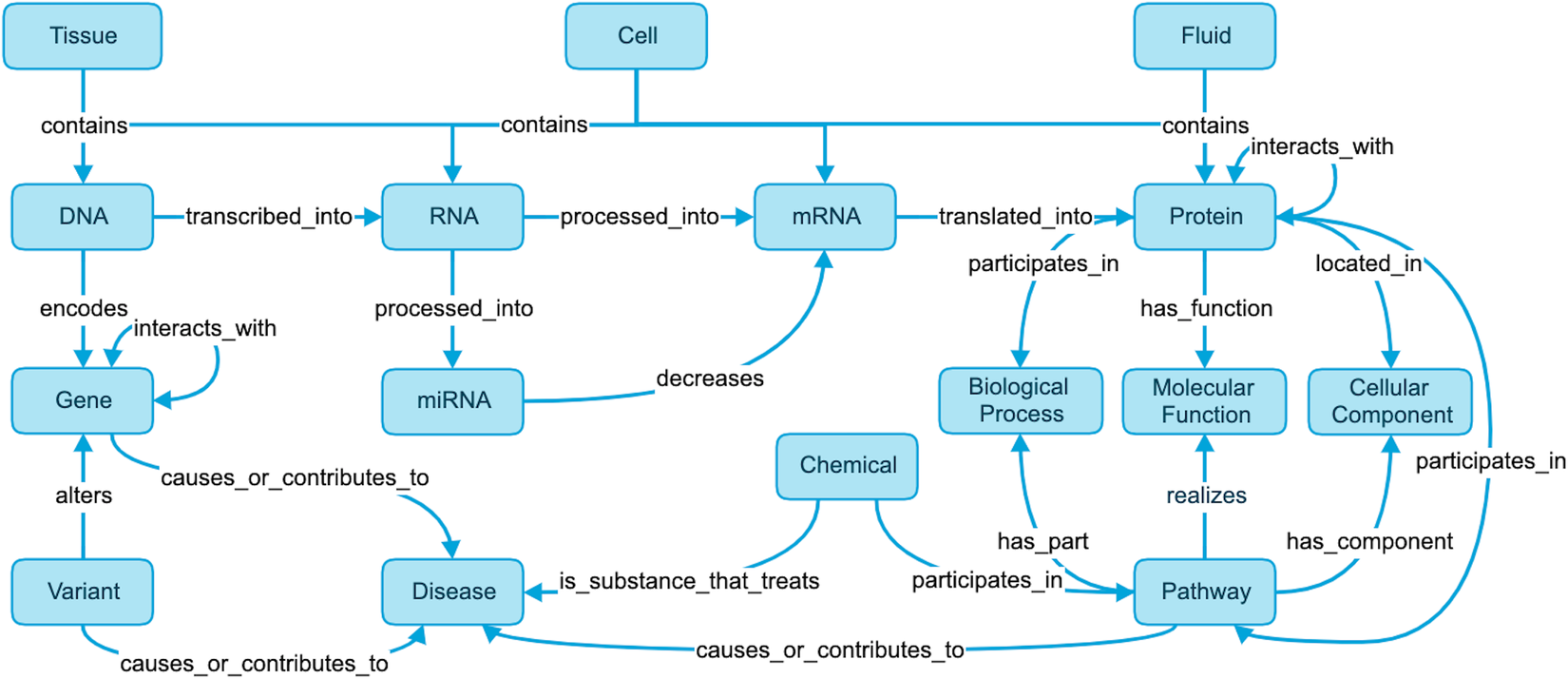
At the technical level, the Scientific Frameworks Architect designs ontologies — formal representations of biological knowledge that define the entities, relationships, and rules of inference that structure a domain. They design data models that capture the complexity of biological systems while remaining computationally tractable. They design interoperability standards that enable data from different sources and different experimental platforms to be integrated and compared. They design AI training pipelines that ensure the models trained on biological data are scientifically valid, reproducible, and interpretable.
At the conceptual level, the Scientific Frameworks Architect translates between the languages of different disciplines — between the vocabulary of molecular biology and the vocabulary of data science, between the concepts of systems theory and the requirements of regulatory policy, between the abstractions of AI and the empirical realities of laboratory science. This translation function is not merely linguistic — it requires a deep understanding of the assumptions, limitations, and blind spots of each discipline, and the ability to design frameworks that are robust to those limitations.
The Ontology Layer: Structuring Biological Knowledge
The most fundamental task of the Scientific Frameworks Architect is the design of biological ontologies — formal, machine-readable representations of biological knowledge that define the vocabulary and logical structure of a domain. Ontologies are the foundation on which all higher-level data integration, AI training, and knowledge retrieval depend.
The Gene Ontology (GO), the Human Phenotype Ontology (HPO), the Disease Ontology (DO), and the Environment Ontology (ENVO) are among the most widely used biological ontologies, collectively providing a structured vocabulary for describing genes, phenotypes, diseases, and ecological contexts. These ontologies are not static — they are living knowledge structures that must be continuously updated to reflect new scientific discoveries, maintained by communities of domain experts, and extended to cover new areas of biological knowledge.
The Scientific Frameworks Architect plays a central role in this ontology development and maintenance process — not just as a technical implementer but as a scientific and governance leader who ensures that the ontology reflects the current state of biological knowledge, is interoperable with related ontologies, and serves the needs of the diverse communities that use it.
| Framework Type | Function | Key Examples | Architect's Role |
|---|---|---|---|
| Biological ontologies | Structured vocabulary for biological knowledge | Gene Ontology, HPO, SNOMED CT | Design, maintenance, interoperability |
| Data standards | Interoperable data exchange formats | FHIR, MIAME, FAIR principles | Standards development, compliance |
| AI training frameworks | Structured pipelines for biological ML | MLflow, DVC, Hugging Face datasets | Pipeline design, validation, governance |
| Knowledge graphs | Integrated multi-domain knowledge networks | Open Targets, BioKG, KG-COVID-19 | Graph schema design, data integration |
| Biosafety frameworks | Risk assessment and governance structures | WHO biosafety levels, tiered data access | Framework design, policy translation |
| Predictive models | Validated computational models of biological systems | PBPK models, GEMs, epidemiological models | Model validation, uncertainty quantification |
The Policy Interface: Frameworks for Governance
The Scientific Frameworks Architect's role extends beyond the technical into the domain of science policy and governance. The frameworks that govern biological research — biosafety regulations, data sharing policies, dual-use research oversight mechanisms — are themselves frameworks in the sense used here: structured systems of rules, definitions, and decision procedures that organise the governance of biological science.
Designing effective governance frameworks for the biotechnology revolution requires the same combination of technical depth and systems thinking that characterises the Scientific Frameworks Architect's technical work. It requires a precise understanding of the biological capabilities being governed, the risks they pose, and the limitations of existing governance mechanisms. It requires the ability to translate between the technical language of biology and the normative language of policy. And it requires the systems thinking needed to anticipate how governance frameworks will interact with the incentive structures, institutional arrangements, and technological trajectories that shape the behaviour of the actors they govern.
In the context of biosafety and biosecurity, the Scientific Frameworks Architect is uniquely positioned to contribute to the development of governance frameworks that are technically grounded, practically implementable, and adaptive to the rapid pace of technological change. This is not a peripheral contribution — it is one of the most consequential ways in which scientific expertise can be brought to bear on the governance challenges of the biotechnology revolution.
Building the Role: Skills, Training, and Institutional Context
The Scientific Frameworks Architect is a role that does not yet have a well-defined training pathway. It is being created, in practice, by individuals who have assembled the necessary combination of skills through non-linear career trajectories — a molecular biologist who developed deep expertise in bioinformatics and then moved into science policy; a data scientist who developed domain expertise in genomics and then became involved in ontology development; a biosafety scientist who developed expertise in AI and data governance.
The skills required include deep domain knowledge in at least one area of the life sciences, proficiency in data modelling and ontology engineering, familiarity with machine learning methods and their limitations, and the ability to engage with governance and policy processes. Equally important are the soft skills of the role: the ability to communicate across disciplinary boundaries, to build consensus among diverse stakeholders, and to maintain intellectual humility in the face of rapidly evolving knowledge.
Institutions that recognise the value of this role — research universities, national health institutes, international organisations, and forward-thinking biotechnology companies — are beginning to create positions that explicitly combine these functions. The Scientific Frameworks Architect is not just a job title but a new kind of scientific leadership: one that is defined not by mastery of a single discipline but by the ability to build the frameworks that make interdisciplinary science possible.
The life sciences are being transformed by AI, data science, and systems thinking at a pace that is outrunning the frameworks — conceptual, technical, and governance — that organise the discipline. The Scientific Frameworks Architect is the professional who builds those frameworks: the invisible infrastructure on which the next generation of biological science will run.